










Compliance language used to arrive at the end of a packaging project, from the customer’s legal team. It now arrives at the beginning, in the specification, because three separate pressures have converged on food packaging: restrictions on PFAS in food-contact materials, extended producer responsibility (EPR) schemes that charge brands for what they put on the market, and enforcement against unverified compostable claims.
1. PFAS in food packaging
PFOA and PFOS are the two names people recognize, but the food packaging concern is the whole fluorinated family used to make paper and fiber grease-resistant. A growing number of US states restrict intentionally added PFAS in food packaging, and the list keeps changing, so verify against the state you are actually shipping into before printing anything on a carton. The EU treats the question through its food-contact and chemicals frameworks rather than state law.
What to require from a supplier:
- A written PFAS-free declaration naming the specific product, thickness and coating, not the whole catalog.
- A test report for total fluorine (or the targeted compound list, depending on which rule you are clearing) from an accredited lab, dated and referencing the batch.
- Confirmation of what provides the grease barrier instead — because “PFAS-free” plus “no visible grease shadow” needs an alternative system, usually a coating or a differently formulated fiber.
Red flag: a supplier whose PFAS-free statement and their compostability certificate name different coatings on the same product.
2. Food-contact basics underneath the eco claims
Before compostability matters, the material has to be legal to touch food. Depending on destination market, the paperwork is usually a US FDA food-contact letter or compliance statement for the resin or fiber, an EU declaration of conformity for plastics and films (the framework covering migration limits), a German LFGB assessment where requested, and heavy-metal limits — lead, cadmium, mercury and hexavalent chromium — which are also written into EN 13432. Coatings, inks, adhesives and the recycled furnish in a molded pulp tray all sit inside this scope, not outside it.
3. Compostable claims and label licensing
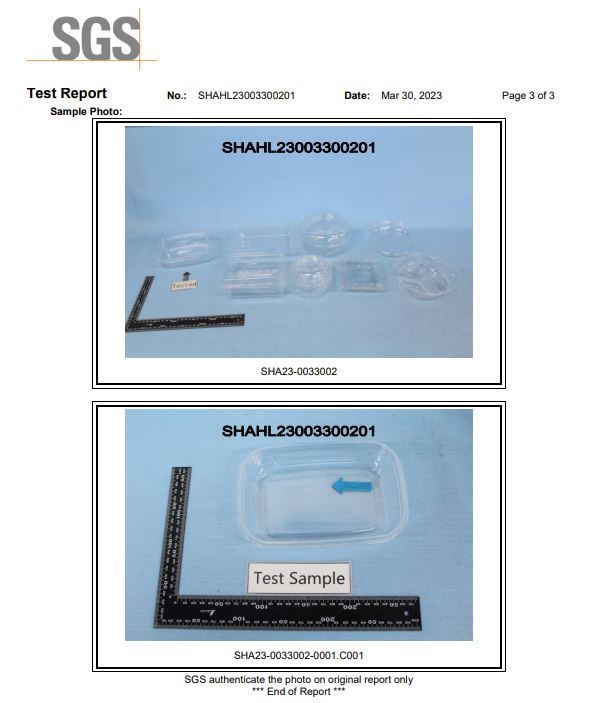
The claim is only as good as the standard behind it — ASTM D6400 or EN 13432 for industrial composting, OK Compost HOME or AS 5810 for home composting. Two operational rules follow from that:
- Printed marks need a license. Certification logos are licensed to a certificate holder for specific certified products. Ask to see the certificate number and confirm the product is on it before you pay for artwork.
- Do not claim what the local stream cannot take. Labeling a tray compostable where no organics collection exists converts a compliance document into a customer complaint.
4. Extended producer responsibility
EPR turns packaging weight into an annual fee paid by the brand or the importer, through national schemes and registers. In practice this shows up in three places on a purchase order: registration obligations (who registers — you, your importer, or your fulfillment partner), fees that are typically graded by material and by recyclability/compostability, and data reporting that needs your supplier to state composition honestly. Choosing a lighter, single-material, certified-compostable tray is not only an environmental decision; under most EPR schedules it is a cheaper one.
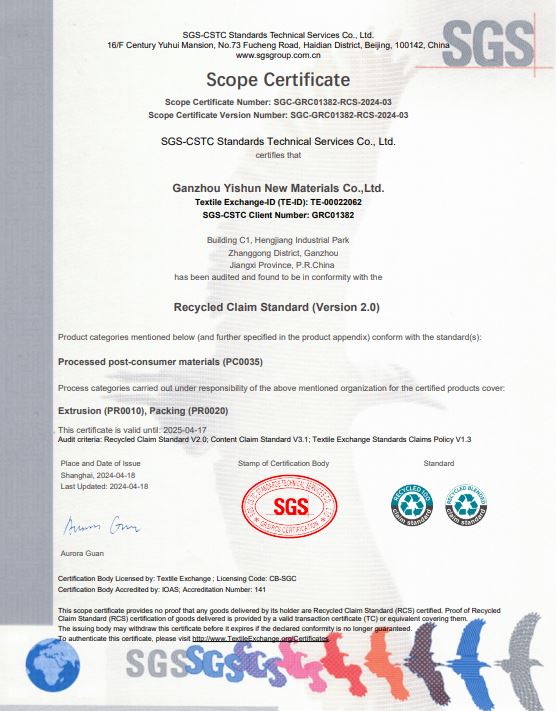
Ask your supplier for a material composition statement per SKU, including any coating, film, or wax content and the recycled-content percentage if you are claiming one. Recycled content claims should be backed by an RCS-type chain-of-custody document rather than an email.
5. The document pack to request before the first PO
| Document | Issued by | What it proves |
|---|---|---|
| Compostability certificate | Certification body | The product meets a named standard |
| PFAS-free declaration + total fluorine report | Supplier + accredited lab | No intentionally added fluorinated chemistry |
| FDA food-contact letter / EU DoC / LFGB | Supplier or material producer | Legal to contact food in the target market |
| Heavy-metal and migration results | Accredited lab | Safe under EN 13432 / food-contact limits |
| Recycled-content (RCS) certificate | Certification body | A claimed percentage is traceable |
| ISO 9001 certificate + QC plan | Registrar + factory | Consistency is managed, not lucky |
| Material composition statement | Supplier | EPR reporting and fee grading |
6. Facility questions that predict paperwork quality
A factory that can produce a document pack in a few days usually has a quality system behind it. Three quick checks: is there an in-house lab or does everything go out to a third party; is batch traceability printed on cartons; and does the audit scope in the ISO certificate cover the site actually producing your SKU. Factories that have been supplying regulated export markets answer these without hesitation — ours keeps FDA test reports, SGS certification documents and ISO 9001 quality management on file, and the production side is described on the factory page.
Make compliance a spec line, not a project phase
The cheapest version of this is boring: agree the standard, the declaration wording, and the document list before tooling, and put them in the purchase order. Compliance discovered after production is a reprint, and a reprint is a season lost.
Send us your destination market and the claim you want to print, and we will tell you which documents exist for each format — contact page. For material selection, start with the FAQ and the buyer programs.
